Ancient roots3 min
At the table before Lebanon was Lebanon
Meet the farmers, traders and fragmentary evidence behind the ancient eastern Mediterranean pantry.
Read the storyThe Maadad Kitchen · A food history collection
The stories behind what we cook,
and what we carry forward.
Ancient ports. Travelling ingredients. A sauce that sparks a family debate. Explore the history of Lebanese food, with room for both the evidence and the people who keep cooking it.
A question worth asking
Ancient sesame, modern oil crops and the history we can actually establish. Start with the garlic sauce.
The reading room
12 stories to explore
Meet the farmers, traders and fragmentary evidence behind the ancient eastern Mediterranean pantry.
Read the storyWere all old garlic sauces made with olive oil? Separate ancient sesame, modern oil crops and today’s fluffy toum.
Read the storyWhy ancient chickpeas do not prove ancient hummus, and why tahini paste is not the sauce poured over falafel.
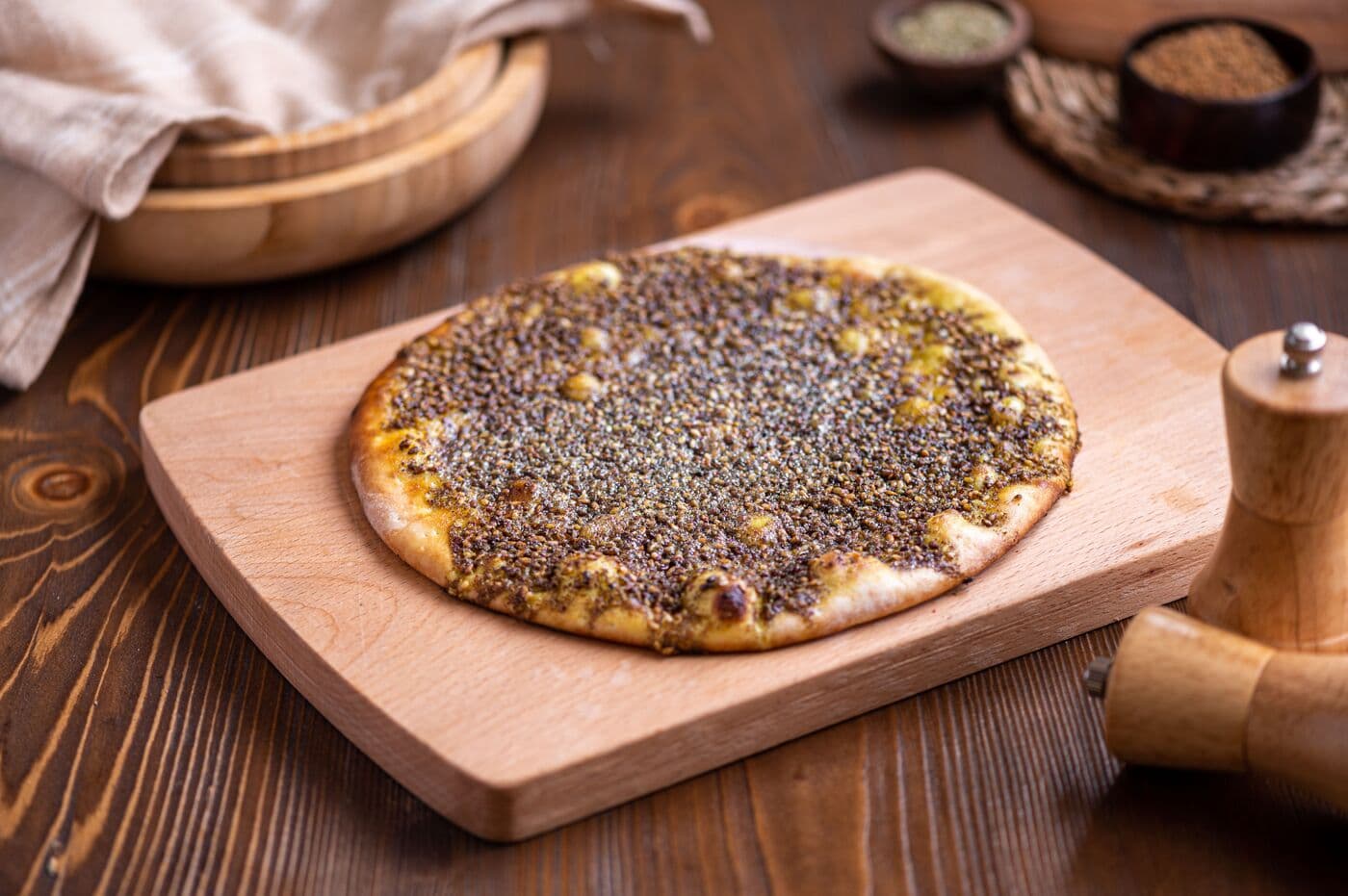
Read the storyThe deep history of bread and the much more specific story of man’oushe, its makers and its toppings.
Read the storySome ingredients arrived long before others. Botanical origins and culinary belonging are different stories.
Read the storyFollow wheat through parboiling, cracking, roasting and shaping, with room for vegetarian kibbeh and regional differences.
Read the storyKishk, fermented wheat and the social history of making food last beyond its season.
Read the storyUnderstand what makes ashta distinct, why quick versions differ, and why a white bowl alone proves very little.
Read the storyOne starts with finely chopped herbs, the other makes bread part of the salad. Neither needs an invented ancient birthday.
Read the storyExplore changing access to sugar, the difference between rose and orange blossom water, and ma’amoul as a living celebration food.
Read the storyFrom coffee’s regional journeys to Lebanese kitchens in South Australia, food history continues through migration.
Read the storyDistinguish an historical reconstruction, a family tradition, a regional practice and a clearly named adaptation.
Read the storyA long view
Selected evidence and developments from the wider region and beyond. These are not birthdays for modern Lebanese dishes.
BCE means before the Common Era; CE means Common Era. Approximate dates reflect the limits of the evidence.
How we tell these stories ↗About 14,400 years ago
Bread remains at Shubayqa 1 in Jordan document early plant processing, not modern pita.
Source: University College LondonAround 2300 BCE
Sesame remains in Mesopotamia help establish a pre-industrial history of oil crops.
Source: Laugier, Casana and Cabanes, Scientific ReportsFirst millennium BCE
Independent maritime cities connect the Levant with other Mediterranean communities.
Source: The Metropolitan Museum of ArtIron Age
The Tell el-Burak press provides material evidence of wine production.
Source: Orsingher and colleagues, The Ancient Near East TodayThirteenth century CE
Scents and Flavors records a Syrian repertoire of dishes and dining preparations.
Source: NYU Press, Library of Arabic LiteratureSixteenth century onward
The tomato reaches Europe from the Americas. Its later local adoption needs separate study.
Source: Royal Botanic Gardens, KewNineteenth century onward
Lebanese migration forms new communities in Australia and new settings for familiar food.
Source: History Trust of South Australia, History Hub1970s
Canola’s breeding and naming chronology belongs to modern agriculture, unlike sesame’s ancient record.
Source: Canola Council of Canada2023
UNESCO inscribes the Lebanese practice of making and sharing man’oushe.
Source: UNESCO Intangible Cultural HeritageKeep this to hand
Spellings vary between transliterations and households. Follow each term for context and sources.
There is more than one family version
A remembered ingredient, a village name, a method that changed after a move. Share a correction, a source or a family story. Personal accounts are published only with permission and attribution.
Get in touch