It is tempting to imagine a table in ancient Sidon covered with all our favourite mezze. The real history is more intriguing. Some ingredients have very deep regional roots, while the dishes we recognise belong to many different periods. To understand the connection, we have to ask what survives: a seed, a press, a pot, a text, or a recipe?
What the evidence can tell us
Archaeology can establish that a crop or process existed at a particular site. It rarely supplies a complete menu, and it cannot automatically establish a continuous recipe tradition.
A coast of cities, not a modern nation
Tyre, Sidon, Byblos and Arwad were important Phoenician centres. The Metropolitan Museum describes independent coastal cities connected through maritime trade, rather than one country with a single national kitchen. Their networks reached across the Mediterranean. That is the geographical starting point: a connected coast, with neighbouring communities and overlapping cultures.[1]
Calling a dish “Phoenician” therefore requires more than locating it in present-day Lebanon. Which city? Which century? Was it food for an ordinary household, a merchant, a religious offering or a feast? Those questions turn an attractive label into a historical investigation.
A wine press tells a concrete story
At Tell el-Burak, south of Sidon, archaeologists identified an Iron Age wine press with a treading basin and collecting vat. Their account describes an agricultural centre connected to regional markets, producing wine alongside cereals and olive oil. Grape remains and transport jars help build a picture of cultivation, processing and distribution.[2]
The same researchers warn that the contents and precise origins of many transport amphorae remain uncertain. A jar is not automatically proof of olive oil, and evidence for trade does not mean that traders invented the crop they carried. Their discussion of wine also describes possible additions such as herbs, honey or resins. Ancient wine should not simply be imagined as a modern bottle without a label.[2]
Bread reaches much further back
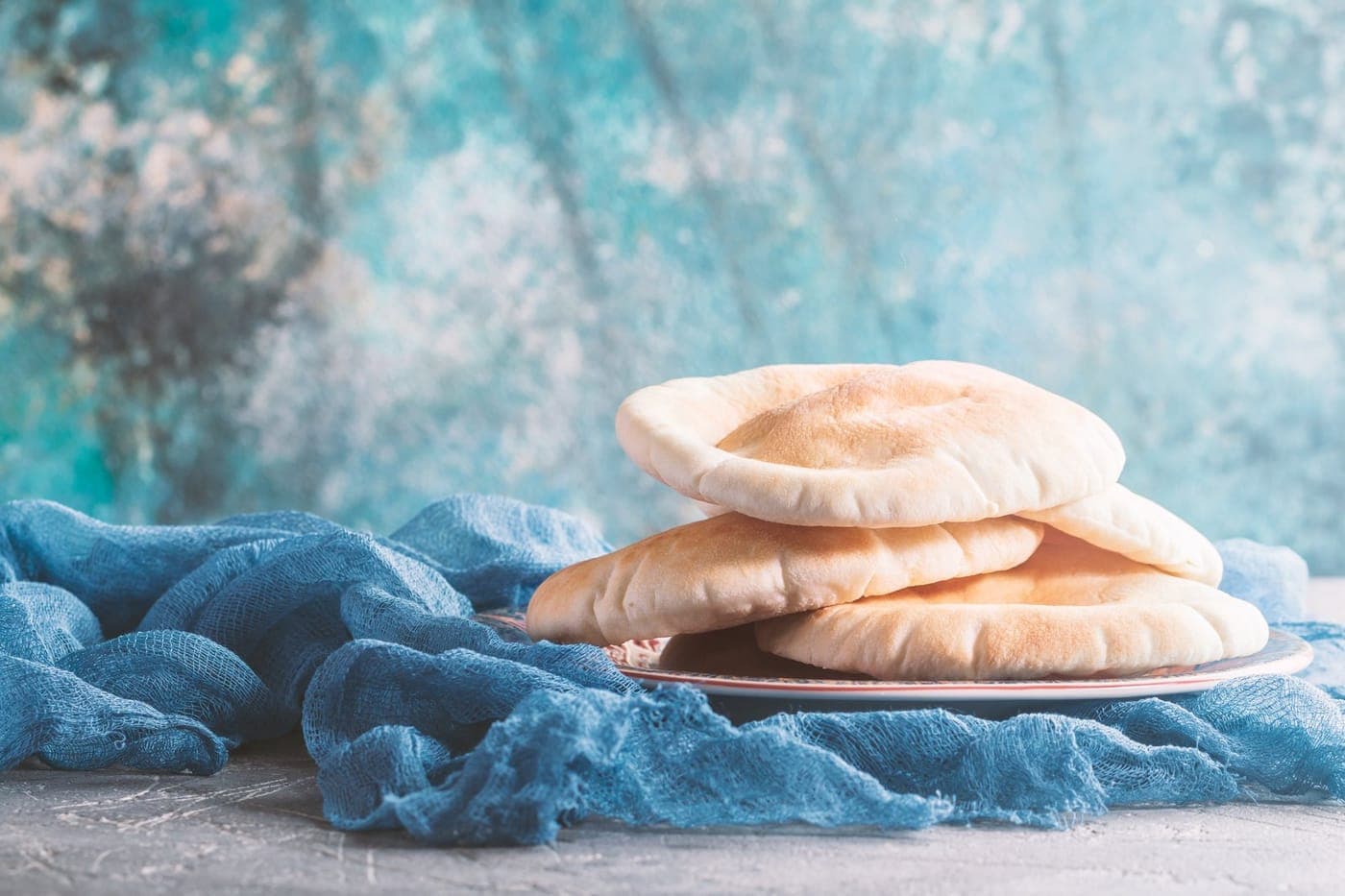
Research at Shubayqa 1 in northeastern Jordan identified bread remains about 14,400 years old, made by hunter-gatherers long before agriculture became established. This is evidence from the wider Levant, not a discovery of modern Lebanese pita. It shows how old the work of processing plants into bread can be, while leaving the ancestry of particular breads open.[3]
That distinction matters whenever we use the word “oldest”. The oldest surviving example is the oldest one currently found and identified. It is not necessarily the first time someone made that food. Preservation, excavation and scientific methods all influence what enters the record.
What might the food have been like?
A careful reconstruction begins with attested materials and tools, then clearly labels the choices the evidence cannot settle. Grinding coarseness, cooking time, dilution and seasoning could change a meal enormously. Even when a crop is established, its everyday preparation may not be. We would describe such a meal as an interpretation inspired by the evidence, not an exact Phoenician dinner.
There is a useful limit we can set: a tomato-filled modern salad cannot be transferred unchanged into that ancient setting. Kew traces tomatoes to the Americas and their introduction to Europe to the sixteenth century. The inference is straightforward, but the exact date tomatoes entered individual Lebanese kitchens requires different evidence.[4]
What to carry to the table
Lebanese food has ancient regional foundations and a long history of change. That is a richer story than assigning every familiar dish a Phoenician inventor.
Ask someone who remembers.
If you could see one piece of an ancient kitchen, would you choose its pantry, its cooking tools or a written menu? Each would answer a different question.
Share a story or a correction ↗Sources & further reading
Historical evidence and contemporary cooking references serve different purposes. The notes below explain how each source was used. Sources checked 29 August 2026.
- The Phoenicians (1500-300 BC) ↗
The Metropolitan Museum of Art
Museum overview of coastal city states and Mediterranean exchange.
- Making, Trading, and Consuming Phoenician Wine ↗
Orsingher and colleagues, The Ancient Near East Today
Archaeologists discuss Tell el-Burak, wine production and the limits of amphora evidence.
- Bread predates agriculture by 4,000 years ↗
University College London
Research team report on 14,400-year-old bread remains at Shubayqa 1 in Jordan.
- Tomato: Solanum lycopersicum ↗
Royal Botanic Gardens, Kew
American origins and introduction to Europe in the sixteenth century; not a date of arrival in Lebanon.