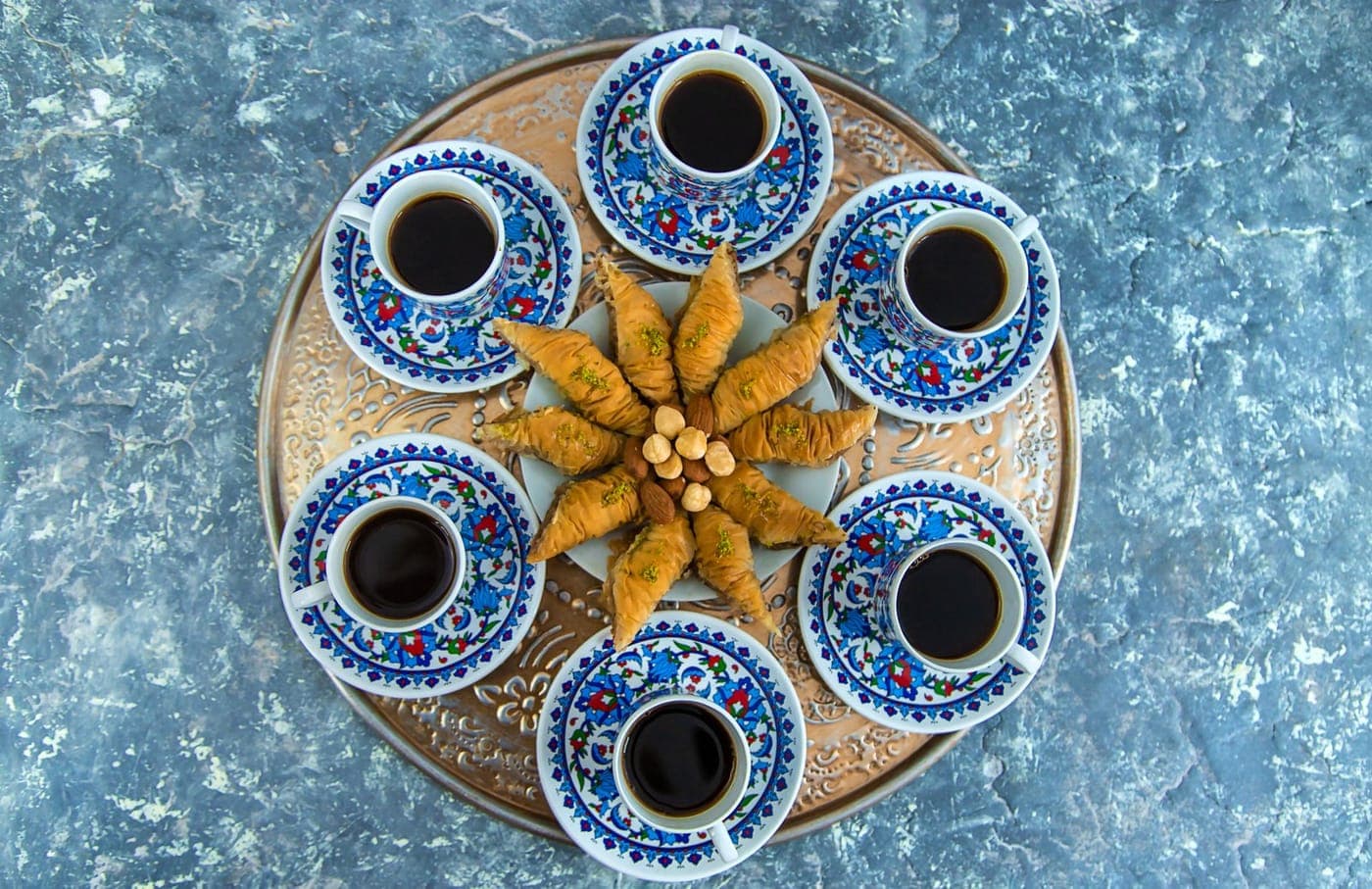
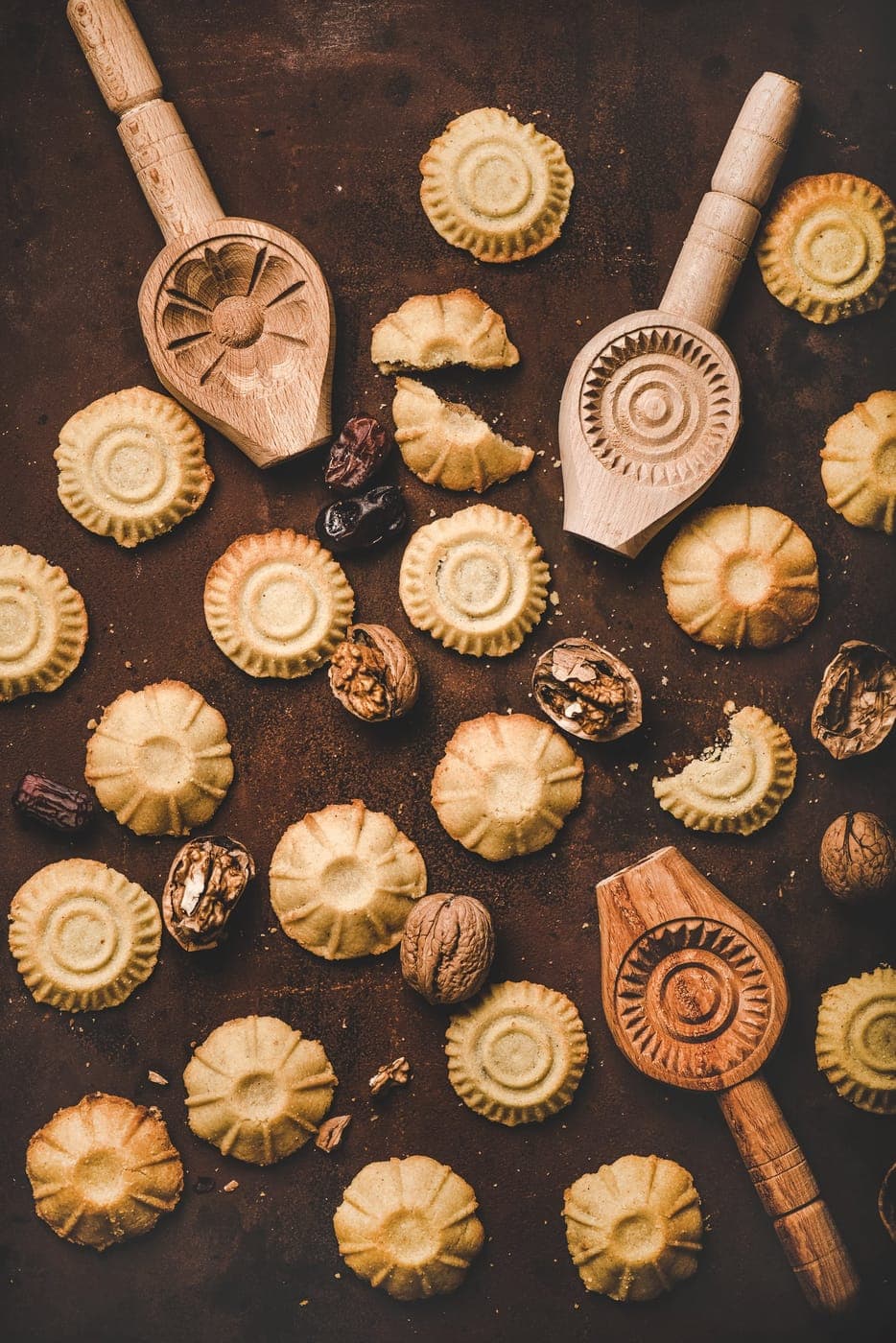
The end of a meal is a good place to ask where a tradition begins. A cup, a serving gesture and an invitation to stay can become deeply familiar even when the drink itself has travelled a long way. Migration adds another layer: people take preferences and skills with them, then cook in a different place.
What the evidence can tell us
Regional coffee history and documented migration history provide context. They are not evidence for an individual Maadad family experience, which would require family testimony.
Coffee is a later chapter than Phoenician trade
Encyclopaedia Iranica’s historical account discusses coffee’s emergence through Ethiopia and Yemen, with competing accounts of its introduction and use in Sufi circles. It places its first recorded appearance in Istanbul in the sixteenth century. The broad point is secure enough for this story: the familiar coffee world belongs to a much later period than the Phoenician cities.[1]
The same account distinguishes drinks made from beans from those made with their husks, and records different preparation practices. “Coffee” should therefore not be treated as an unchanging technique. A shared name can contain differences in raw material, roasting, brewing and serving.[1]
Hospitality is a practice, not a universal script
UNESCO’s Arabic coffee entry documents hospitality and transmission of serving customs in Jordan, Oman, Qatar, Saudi Arabia and the United Arab Emirates. Lebanon is not one of the submitting states in that inscription. It offers a regional comparison, not authority for saying every Lebanese household follows those exact rituals.[2]
Our own coffee recipe page introduces a rakwa preparation. To document a household’s practice, ask about the roast, grind, sweetness, optional aromatics, cups and timing. Do not assume one regional custom tells you how another family serves coffee, or that every guest drinks it.
A Lebanese pantry in South Australia
The History Trust of South Australia records Lebanese migration in the nineteenth century and explains that migrants from the Ottoman region were described in Australian records under changing labels, including Turkish and Syrian. It also describes early difficulty obtaining Lebanese food ingredients, followed by the establishment of shops supplying herbs, spices and other essentials.[3]
This history helps us ask better questions about food abroad. What could be bought locally? What arrived in a suitcase or parcel? What grew in a garden? Which substitutions stayed after the original ingredient became available? The community record gives context, but those individual answers must come from the people who lived them.
A changed recipe can still carry continuity
For this collection, we treat migration as part of food history rather than an interruption that makes every subsequent recipe less valid. A cook can change an ingredient while preserving a technique, an occasion or the way a meal is shared. That is an editorial way of reading continuity, not a claim that all changes are the same.
When gathering a family story, keep the date and place with it. “How we made it in Adelaide in the 1980s” is a stronger historical record than “how Lebanese people always made it”. Let relatives disagree, record the differences and ask permission before publishing names or personal memories. The disagreement may be the most illuminating part.
What to carry to the table
Lebanese food history continues wherever people cook it. Specific memories, honestly attributed, are more valuable than a generic story about every family.
Ask someone who remembers.
Which ingredient was hardest to find after a move, and what did your household use instead?
Share a story or a correction ↗Sources & further reading
Historical evidence and contemporary cooking references serve different purposes. The notes below explain how each source was used. Sources checked 29 August 2026.
- Coffee ↗
Sayyed Ali Al-e Dawud, Encyclopaedia Iranica
Scholarly history of coffee, competing introduction accounts, Yemen and Ottoman-era spread.
- Arabic coffee, a symbol of generosity ↗
UNESCO Intangible Cultural Heritage
2024 expanded inscription for Jordan, Oman, Qatar, Saudi Arabia and the UAE. Lebanon is not a submitting state.
- Lebanese in South Australia ↗
History Trust of South Australia, History Hub
Migration and community history, including early difficulty sourcing Lebanese ingredients. Not Maadad family testimony.