White, thick and served in a bowl is not a useful definition of a dairy food. The starting ingredient and the method matter. Ashta, labneh and kishk lead us to three different preparations, and to a broader question: when does a convenient substitute need to be named as a substitute?
What the evidence can tell us
The sources here document present-day preparations and their differences. They do not establish a Phoenician origin or one universal historical formula for these foods.
Ashta: begin with milk and the method
Yumna Jawad distinguishes a traditional milk-skin preparation of ashta from her quicker home method. In the former, cream is collected from heated milk; her shortcut combines curds with a thickened milk preparation. That distinction is more useful than treating every product called ashta as technically identical.[1]
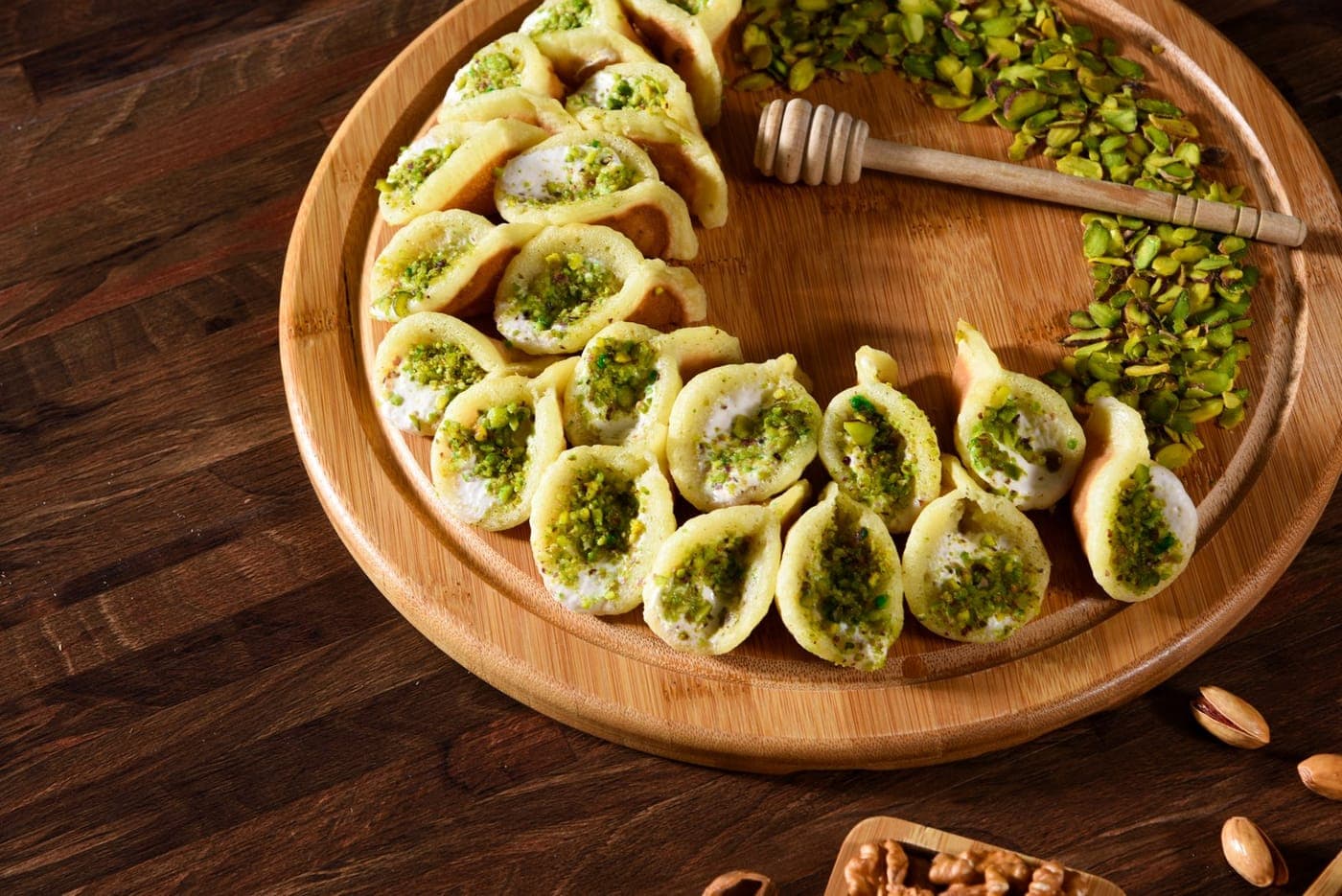
For our purposes, the essential identification is a milk cream used in the dessert kitchen, not a bowl of strained yoghurt dressed for a savoury breakfast. A food photograph should show the actual preparation being described. Styling a different white dairy product similarly does not make it ashta.
Quick ashta is a real variation, not an ancient claim
Maureen Abood publishes an ashta made with whole milk and cornstarch, scented with flower waters, and notes that other recipes use bread as a thickener. Her version demonstrates how the name is used for accessible home preparations. It should not be mistaken for evidence that all ashta was always made with starch.[2]
The useful label is the specific one: milk-skin ashta, a curd-based shortcut, or a starch-thickened dessert cream. That allows a cook to choose for texture, available time and the dessert being made. It also lets readers understand a family recipe without making it responsible for representing every pastry kitchen.
Labneh: yoghurt with whey removed
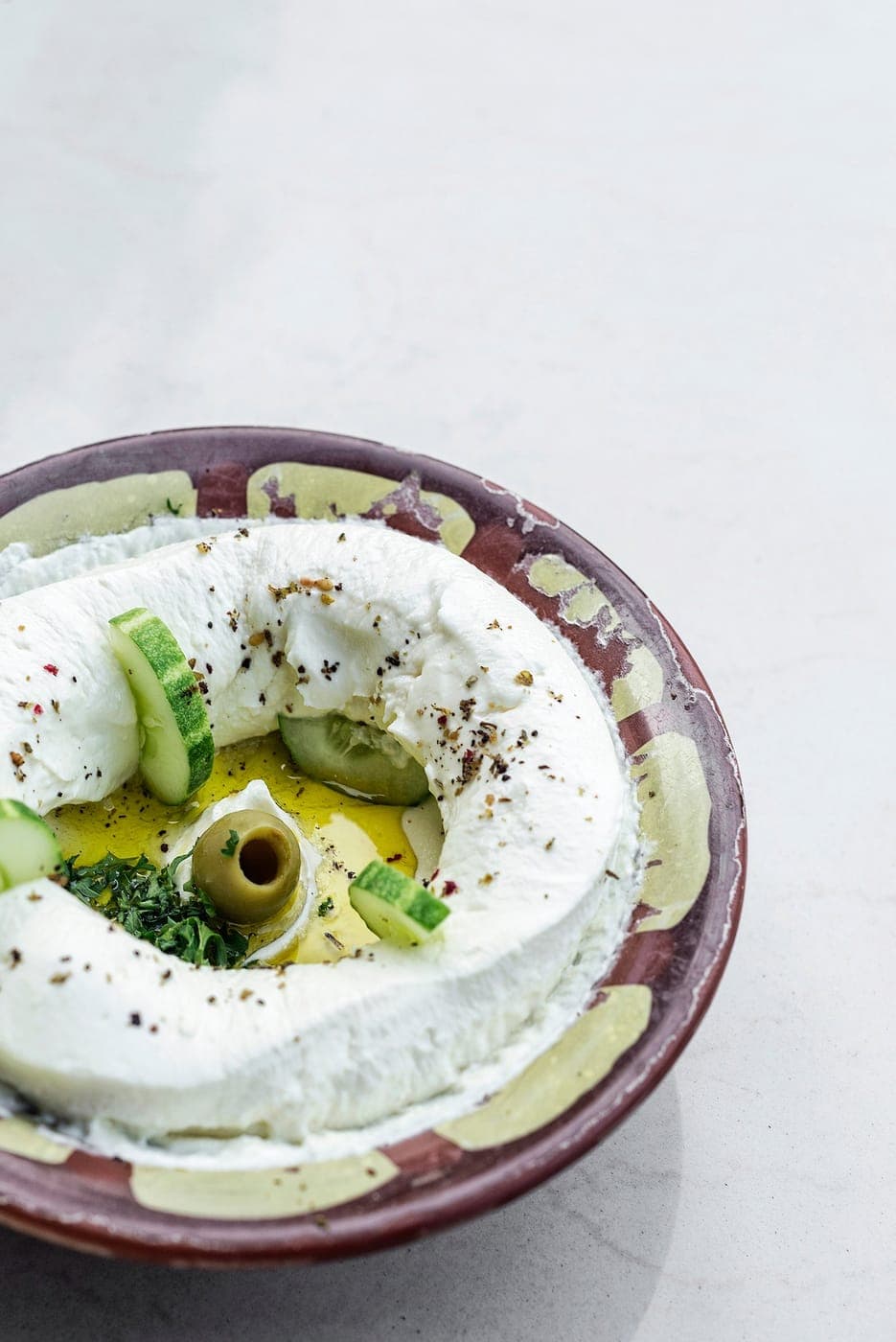
Rouba Shahin’s labneh begins with natural yoghurt and is strained to remove whey. Longer straining changes the thickness. Its yoghurt starting point is the important difference from the ashta preparations above. Thickness alone cannot identify it: two products can hold the same spoon mark and still taste and behave differently.[3]
Olive oil on a white spread is a visual clue about serving, not a chemical test. Before choosing a photo, look for the source’s actual dish name, ingredients and description. Neither the colour nor a decorative garnish can reliably tell the whole story.
Kishk adds another transformation
In the Lebanese preparation documented by Slow Food, kishk combines dairy and bulgur, fermentation and drying. It therefore differs from both a fresh cream and strained yoghurt. The separate mouneh article examines that preserved food and a related fermented wheat preparation that contains no milk.[4]
Names travel between languages and regions, and similar-looking products are often used as substitutes. When writing a recipe or caption, say what was actually used. “Made with a substitute” can be an honest and helpful instruction. Quietly changing the ingredient while keeping a claim of exact historical authenticity cannot.
What to carry to the table
Identify dairy foods by their ingredients and preparation, then by their role at the table. A matching colour is not enough.
Ask someone who remembers.
Was the ashta you knew collected from milk, made as a quick cream, or bought from a particular pastry shop?
Share a story or a correction ↗Sources & further reading
Historical evidence and contemporary cooking references serve different purposes. The notes below explain how each source was used. Sources checked 29 August 2026.
- How to Make Ashta ↗
Yumna Jawad, Feel Good Foodie
Author distinguishes milk-skin preparation from her quicker curd-and-starch method.
- Ashta with Fresh Fruit ↗
Maureen Abood
Modern milk-and-cornstarch version, with flower waters; demonstrates variation rather than an ancient standard.
- Labneh (Strained Yogurt) ↗
Rouba Shahin
Contemporary cook’s account of yoghurt strained to remove whey; only ingredient and texture information used.
- Traditional Kishk ↗
Slow Food Foundation, nominated by Barbara Massaad and Nour Helou
Lebanese dairy and bulgur preservation practice. Unsubstantiated ancient-jar and health claims are not used.