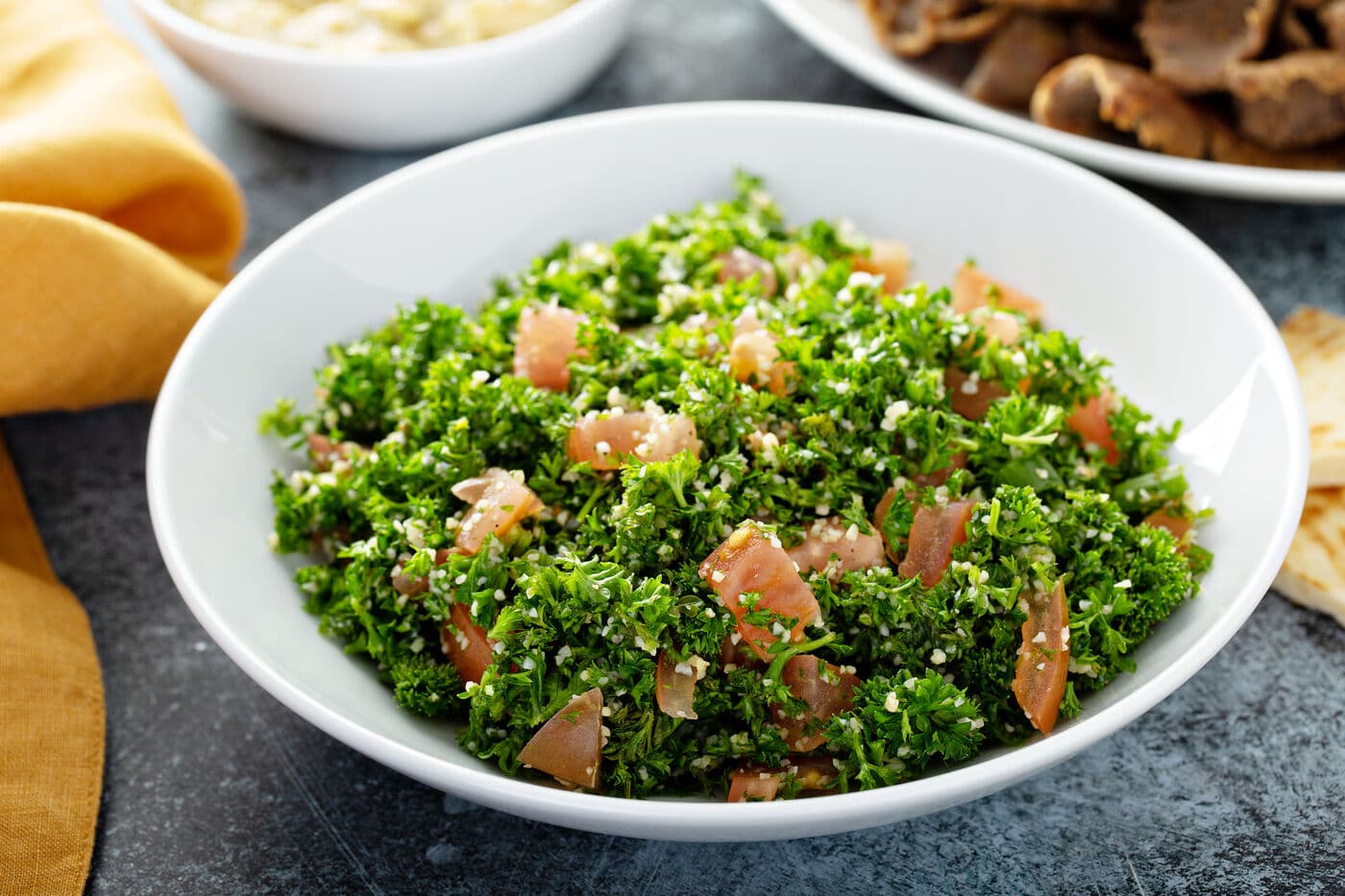
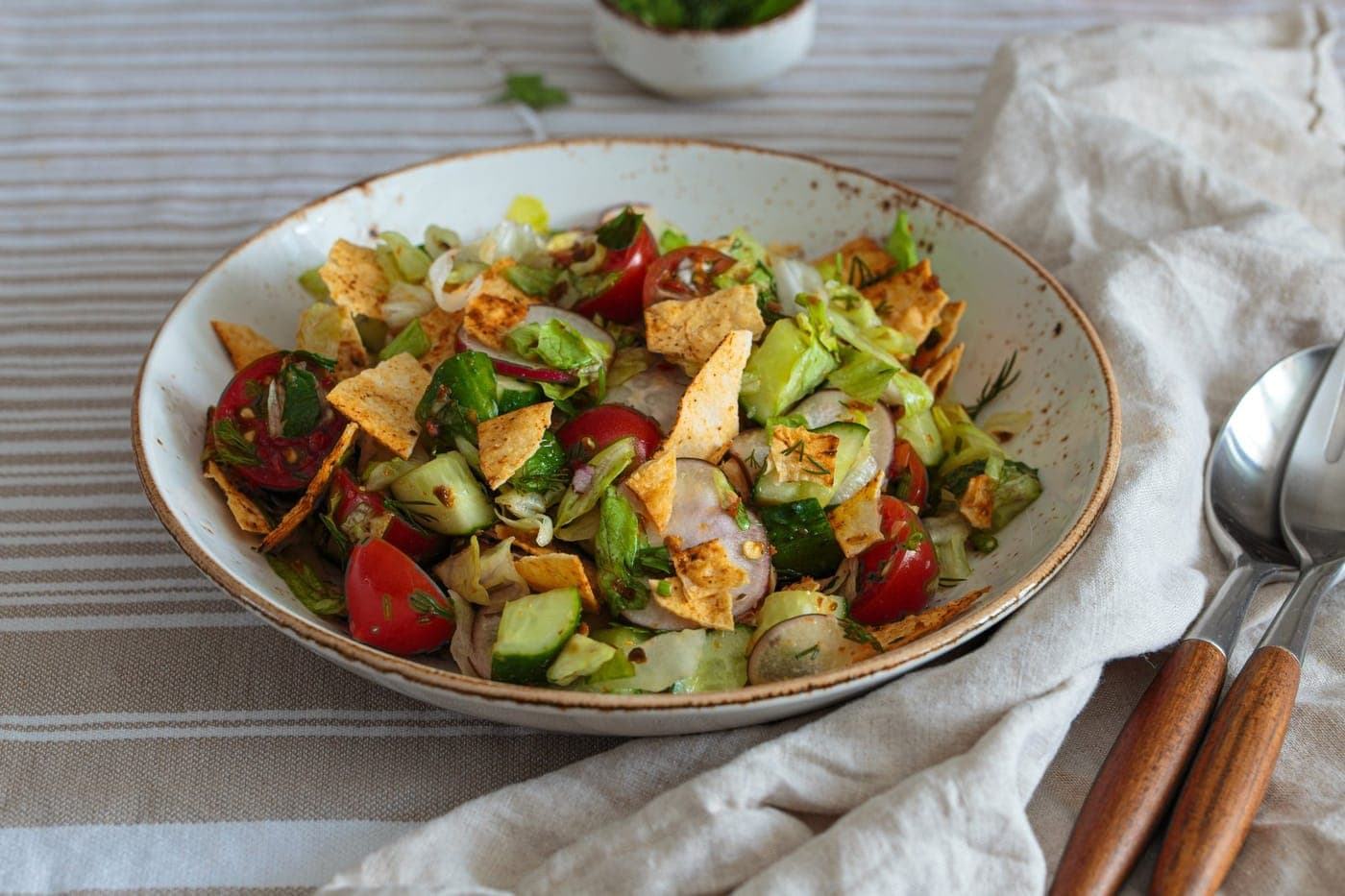
These salads can sit beside each other at a Lebanese meal without doing the same job. Tabbouleh asks us to notice the preparation of herbs and the balance of fine ingredients. Fattoush asks us to notice bread, vegetables and sharp seasoning. Their differences are more revealing than a generic label such as “Mediterranean salad”.
What the evidence can tell us
The sources document contemporary recipes and botanical history. They do not establish one inventor, one village of origin or an unchanged Phoenician recipe for either salad.
Tabbouleh: parsley is not just a garnish
Maureen Abood’s Lebanese tabbouleh is centred on parsley, with mint, tomato, onion and a smaller amount of fine bulgur. The herb preparation matters: washing, drying and chopping are central to its texture. Her discussion also allows for different parsley types. It is a documented approach that helps explain why a large bowl of grain with a little green on top feels like a different dish.[1]
That does not make every deviation a moral failure. It makes proportion an important thing to name. If a cook intentionally makes a grain-led variation, describing that choice is more useful than presenting a personal adaptation as the one standard everyone else should follow.
Fattoush: bread belongs inside the idea
Abood’s fattoush combines vegetables and lettuce with crisp pita. Her dressing uses lemon, sumac and pomegranate molasses. In that preparation, bread is not merely served alongside the bowl: it contributes texture and takes up dressing. This is a particular contemporary recipe, not proof that every household uses the same vegetables or dressing.[2]
A bread salad naturally invites questions about household economy and using what is available. It is reasonable to investigate that connection. It is not enough to prove a charming story about the first family who supposedly invented fattoush from leftovers. An appealing explanation and a documented origin are different things.
Why the modern bowl cannot simply be ancient
The tomato’s American origin and sixteenth-century journey to Europe, recorded by Kew, rule out an unchanged tomato-containing Phoenician salad. This is an inference from ingredient history, not a precise date for the invention of tabbouleh or fattoush. A dish can retain an older idea while its ingredients change.[3]
If an older recipe is found, the comparison should be specific. A chopped-herb dish is not automatically tabbouleh; a bread-containing dish is not automatically fattoush. We would need to consider preparation, proportions, seasoning, name and context together.
A better conversation about a good salad
At your next meal, ask what the cook intended. Was the herb texture fine or coarse? Was the bread added at the last moment or allowed to soften? Which ingredient supplied the sharpness? Where did sweetness come from? These questions make it possible to describe a version accurately without reducing the discussion to a single approved ingredient list.
For a family record, write down the small instructions usually omitted: the bowl used for measuring, what “a little” means and what the cook checks before serving. The recipe is partly in those decisions. Recording them respects the work behind food that is often casually called simple.
What to carry to the table
Recognise the structure of each salad, then make room for clearly described household differences. Ancient claims need more than familiar ingredients.
Ask someone who remembers.
Which gets the strongest reaction at your table: the amount of bulgur, the way the parsley is chopped or when the bread goes in?
Share a story or a correction ↗Sources & further reading
Historical evidence and contemporary cooking references serve different purposes. The notes below explain how each source was used. Sources checked 29 August 2026.
- Tabbouleh Salad ↗
Maureen Abood
Contemporary parsley-led recipe and discussion of herb preparation and fine bulgur.
- Lebanese Fattoush Salad ↗
Maureen Abood
Contemporary bread salad with sumac, vegetables and a pomegranate molasses dressing.
- Tomato: Solanum lycopersicum ↗
Royal Botanic Gardens, Kew
American origins and introduction to Europe in the sixteenth century; not a date of arrival in Lebanon.